Download our 2025 Spring Meeting Takeaway’s PDF
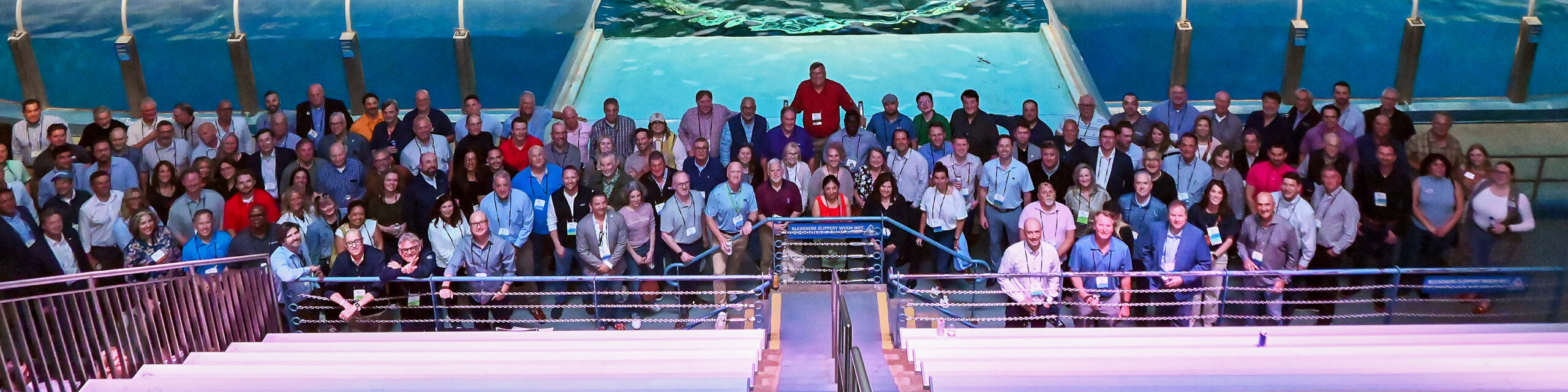
At PPC’s 2025 Spring Meeting in Indianapolis, the energy was unmistakable: momentum was not just a theme—it was a spirit that carried through every conversation, presentation, and connection. From the moment we gathered for our unforgettable Welcome Reception at the Indianapolis Zoo’s Dolphin Exhibit, it was clear we were experiencing something special. New ideas sparked, old friends reunited, and a shared optimism for the future of paperboard packaging set the tone for what many called our “best ever” Spring Meeting.

Our conference opened with powerful remarks from Eric Frank, SVP, Marketing and Product Management at Koenig & Bauer, our Diamond Sponsor, and longtime champion of the print and packaging industries. Eric reminded us that while technology—especially AI—continues to accelerate, it is human creativity, inspiration, and storytelling that drive true innovation. He challenged us to embrace emerging tools without losing sight of the human spirit that no algorithm could replicate, urging us to balance heart, purpose, and ingenuity as we move forward.

PPC Board Chair Steve Scherger, EVP & CFO of Graphic Packaging International, built on this message of resilience and leadership. In a time of economic uncertainty and shifting market dynamics, Steve encouraged members to recognize that while some forces are beyond our control, our response—and our commitment to progress—remains firmly in our hands. He called on all of us to view this moment as an opportunity: to adapt, to lead with confidence, and to distinguish ourselves through positivity, perseverance, and a steadfast belief in the future of paperboard packaging.
Together, we reflected on our industry’s momentum as something we actively build, protect, and propel forward. From the main stage to breakout rooms, the spirit of collaboration and innovation was evident. As you explore the key takeaways from this year’s conference, we hope you find inspiration, practical insights, and a renewed sense of purpose to carry the momentum home to your businesses and teams.
This is what leadership looks like. This is what momentum feels like. And thanks to you, this truly was our best Spring Meeting yet.
Stabilize, Then Strengthen: How RRD Built a Culture-Driven Path to Long-Term Success:
Lisa Pruett, President, Packaging and Label Segment, RRD
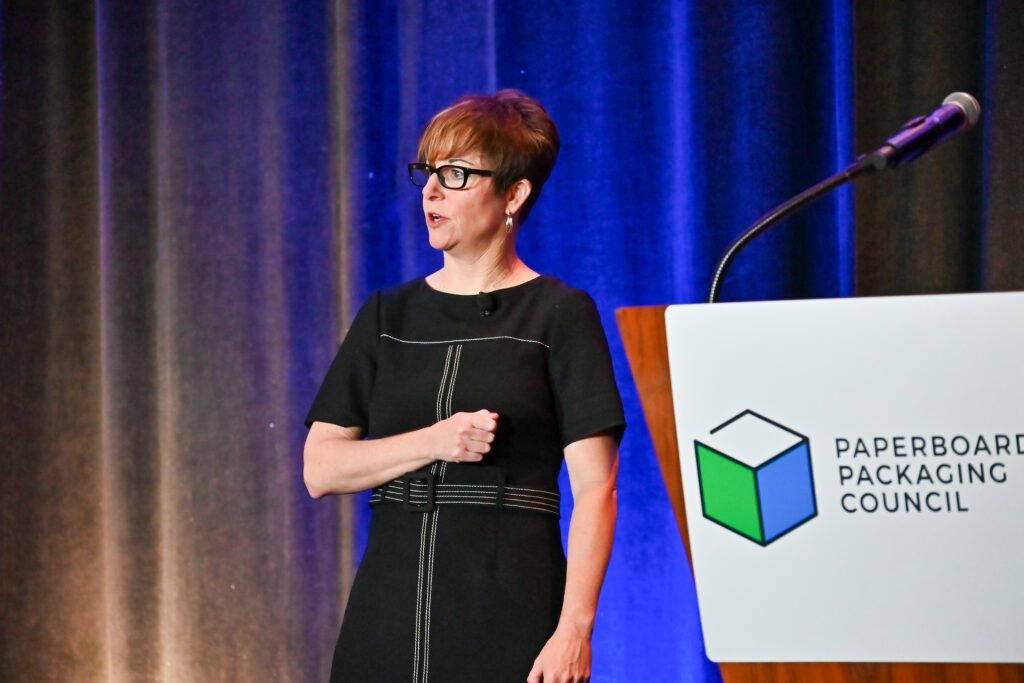
When RRD began its packaging business transformation, the initial focus was where many companies start: stabilizing operations and improving financial performance. The team aligned their product offerings, streamlined operations, and centralized key functions like sales enablement and estimating. They put systems in place, consolidated ERP platforms, and addressed declining productivity trends with a laser focus on data-driven KPIs. These efforts brought the business back to solid ground—revenue grew, profitability improved, and key operational metrics stabilized.
But as Lisa Pruett shared, the numbers didn’t tell the full story. While the business was healthier, morale was strained. Aggressive changes had eroded trust, and the organization lacked a shared growth mindset. Stabilization was not enough.
RRD realized that to truly thrive—and sustain the momentum—they needed to invest in building a strong culture. Culture could not be left to grow organically; it had to be designed with the same rigor and intentionality as any operational initiative.
From 2022 to 2024, RRD launched a comprehensive cultural transformation. They implemented a Culture Scorecard to help plants measure engagement and community-building activities. Over 450 employees globally participated in culture-shaping training. Plant-level initiatives like safety committees, employee roundtables, community service projects, and town halls reinforced a sense of belonging and shared purpose. Recognition became part of the fabric of leadership, celebrating both personal milestones and team achievements.
This intentional focus on culture delivered measurable business results. In the North American packaging business, RRD grew revenue by 25% and improved employee turnover by 28% in 2023 alone. Teams became more resilient, collaborative, and aligned with a long-term growth mindset.
Throughout the journey, one lesson stood above the rest: communication must be constant. Leaders are committed to ongoing dialogue—repeating key messages often, staying visible in plants, and creating opportunities for feedback. In moments of change and uncertainty, communication kept the team focused and moving forward.
Lisa’s presentation underscored a powerful message for all industry leaders: Stabilization is just the beginning. True transformation happens when organizations strengthen the cultural foundations that allow innovation, growth, and resilience to take root and endure.
Avoiding Costly Employment Lawsuit in Today’s Turbulent Times:
Jessica Rosen, ESQ., Partner, Greenwald Doherty LLP
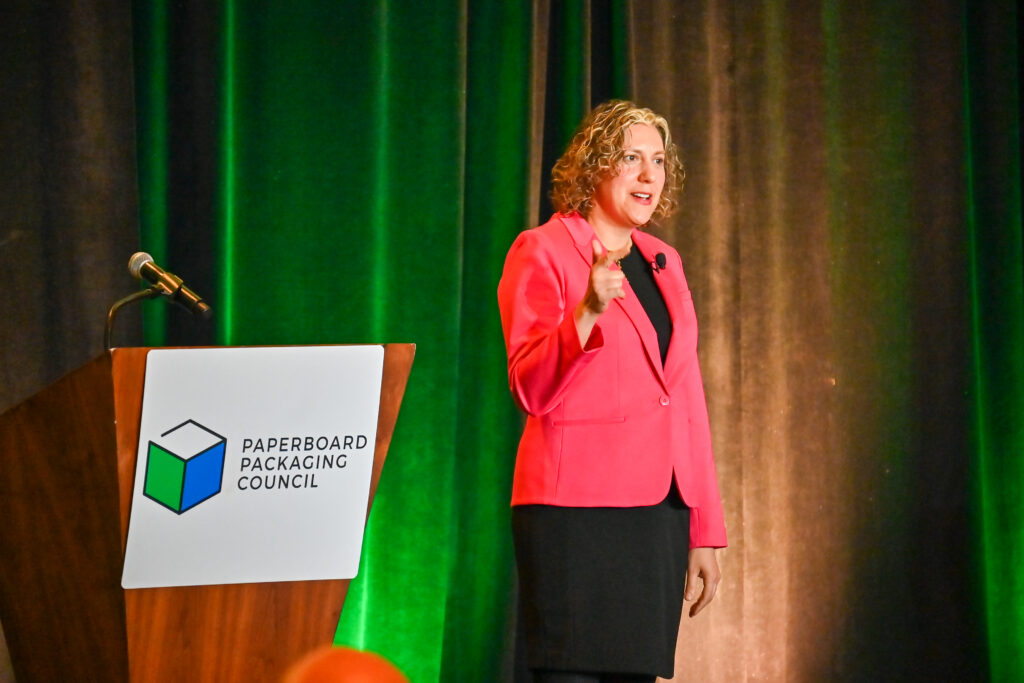
As companies integrate AI tools and refine their diversity initiatives, new legal risks are emerging. Jessica Rosen offered a timely and practical roadmap to help members stay compliant and proactive in today’s shifting environment.
AI in the Workplace:
The use of AI in hiring and operations is growing rapidly, but it comes with hidden legal risks. Companies are responsible not only for the AI tools they build, but also those they buy.
Employers should:
- Establish internal policies for AI governance, monitoring, and accommodation.
- Audit hiring and AI platforms for compliance with anti-discrimination and privacy laws.
- Validate that AI tools are job-related and business-necessary.
- Train staff to use AI appropriately, keeping a human in the loop to oversee decisions. Failure to address systemic bias or provide proper accommodations for AI-driven assessments could result in discrimination claims and heavy penalties.
DEI Programs and Litigation Risks:
- While diversity, equity, and inclusion (DEI) remain important, the legal landscape around these efforts is shifting.
- There is a rising risk of reverse discrimination and retaliation claims.
- The EEOC is increasing enforcement on private companies’ DEI programs.
- Lawsuits are on the rise from employees who perceive discrimination tied to DEI efforts.
- Jessica emphasized that abandoning DEI initiatives carries reputational risks, but poorly structured programs can expose companies to lawsuits.
Employers should:
- Audit DEI programs for legal compliance—avoiding quotas or mandates.
- Consider rebranding or repositioning programs to focus on inclusive culture-building.
- Move from employer-driven DEI initiatives to employee-led affinity groups with clear, inclusive policies.
- Always work closely with legal counsel to adapt policies thoughtfully.
A Unified Approach:
Jessica stressed the importance of a cross-functional response team—legal, HR, communications, finance, and leadership—ready to assess risks, manage incidents (especially online conduct), and ensure decisions align with company values. In today’s legal climate, being proactive isn’t optional—it’s critical to protect your people, your reputation, and your future growth.
The Courage to Collaborate: Navigating the New Packaging Landscape Together:
Paul Nowak, Executive Director, GreenBlue
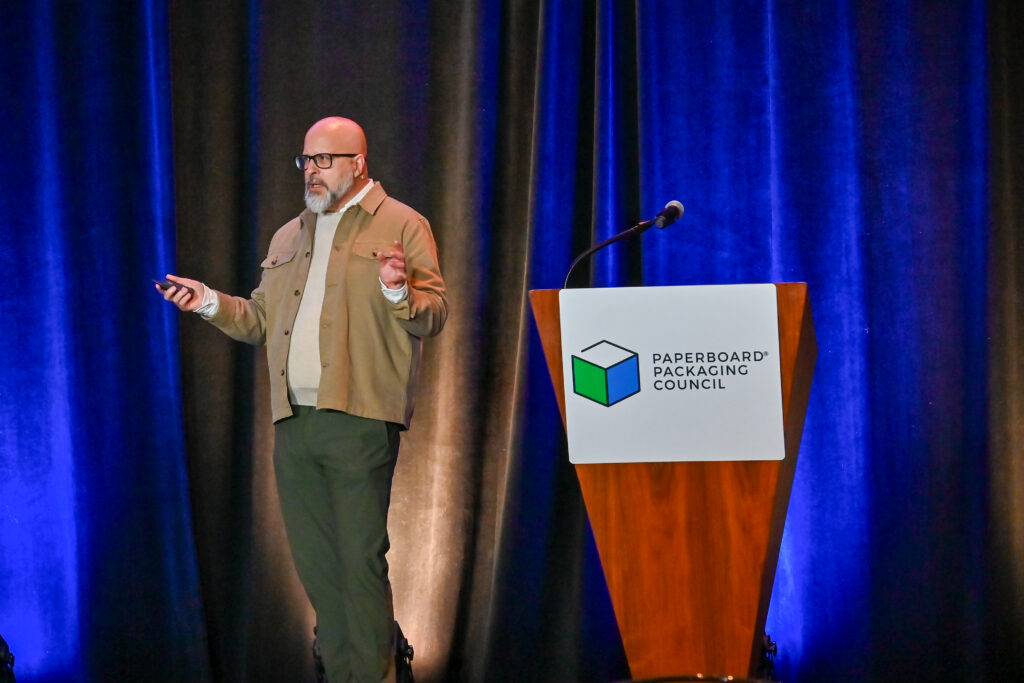
In his dynamic session, Paul Nowak, Executive Director at GreenBlue, challenged the PPC community to see collaboration not as an option, but as a responsibility. Paul emphasized that industry transformation happens when companies step out of their silos and work together toward circular solutions.
Key Themes and Takeaways:
- Collaboration Fuels Progress: The success of programs like How2Recycle and the Recycled Material Standard demonstrates the power of uniting brands, retailers, suppliers, and converters around common goals. Paul reminded us that real change happens when organizations prioritize progress over individual agendas.
- Legislation is Reshaping the Industry: Extended Producer Responsibility (EPR) legislation is rapidly advancing across the U.S., with five states already passing laws. Companies must act now—register with Producer Responsibility Organizations (PROs) like the Circular Action Alliance and prepare for reporting obligations.
- Eco-Modulation is Changing Costs: Future EPR fees will be linked to packaging recyclability and design. Companies that invest in sustainable materials, clear labeling, and consumer education will save costs and gain a competitive edge.
- Paper is Well-Positioned: With eco-modulation favoring recyclable, renewable materials, paperboard packaging is uniquely poised for growth. However, Paul stressed that industry leadership will require active participation in standard-setting efforts like the Paper Packaging Recyclability Collaborative.
- Data is Essential: Harmonization of recycling standards and data collection is critical. Without it, packaging companies risk regulatory challenges, misinformed design decisions, and missed opportunities for innovation.
- Overcoming Fear, Ego, and Inaction: Paul called on the industry to choose courage over hesitation. Fear of failure, attachment to outdated practices, and analysis paralysis can stall progress. Instead, he urged members to lean into collaboration, share information openly, and keep momentum moving forward.
Member Spotlight: Building Legacy at 3A Press:
Marie Rosado, President, 3A Press, Corporation
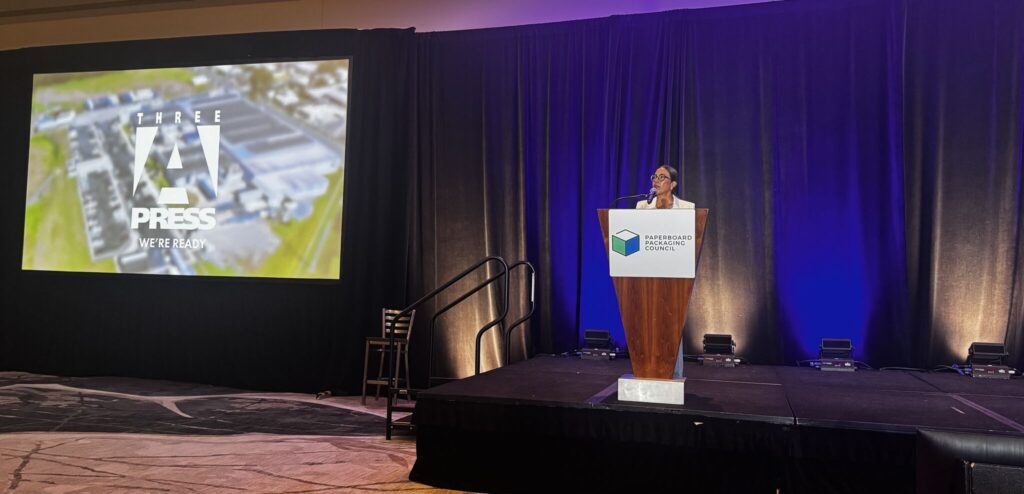
Marie Rosado captivated attendees by sharing the inspiring multigenerational story of 3A Press. The company’s roots date back to 1948 when her grandfather founded a humble printing shop in Puerto Rico. After years of dedication, Marie, her brother Alex, and their family expanded those early dreams into a leading force in the folding carton industry.
In 1996, after facing unexpected professional setbacks, Marie and Alex founded 3A Press on April 23—transforming adversity into opportunity. Over the next 26 years, they built a company grounded in resilience, innovation, and a deep commitment to quality. Even following Alex’s passing, his legacy lives on as the fourth generation of the Rosado family carries the business forward.
Marie spoke proudly about how “ink runs through her veins,” reflecting a lifetime passion for the craft. 3A Press’s success is driven by consistency in service and quality, a visionary focus on environmental responsibility, and strategic investments in new technologies to stay competitive. Their growth story mirrors broader industry shifts—while demand for paper products has declined, folding cartons are on the rise.
Today, as a certified minority-owned business, 3A Press stands as a beacon of perseverance, evolving with market demands while remaining grounded in its mission. As Marie emphasized, their excellence is not just about meeting today’s challenges—it’s about building something lasting for future generations.
Economic Outlook: Staying Strong Amid Shifting Tides:
Chris Kuehl, Managing Director, Armada Corporate Intelligence
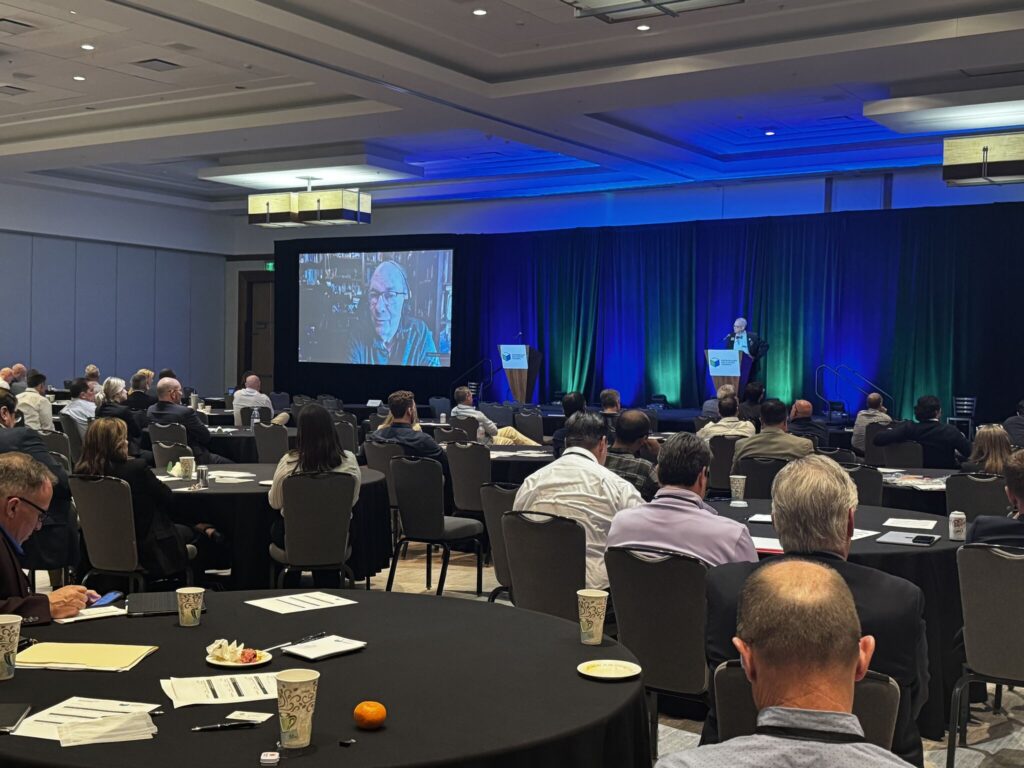
Chris Kuehl joined us virtually to deliver a fast-paced, engaging economic update, reminding PPC members that while volatility remains high, businesses that stay agile and invested in their people and processes will be best positioned to thrive.
Key Takeaways:
- Tariff Volatility:
Tariff policy changes continue to shift quickly. While tariffs on China remain a flashpoint, the overall approach is moving toward a more country-specific, case-by-case evaluation. Negotiations and exclusions are accelerating, and mid-summer is expected to bring a more stable environment for businesses to plan around. - Retail and Consumer Spending:
Consumer behavior remains the heartbeat of the economy—and by extension, packaging demand. High-income consumers ($100K+) continue to spend steadily on goods and travel, while the bottom third of consumers (under $50K) is feeling significant pressure. The middle-income bracket remains critical: if wage growth keeps pace with inflation, spending should hold; if not, caution could ripple into retail. - Labor Shortages and Workforce Challenges:
A looming labor shortage will define the next decade. By 2030, the U.S. will face a severe skills gap if training and recruitment efforts aren’t scaled aggressively. Only 5% of high school students participate in industrial arts today, despite 40% of the population being kinetic learners who excel through hands-on experience. If we don’t address this skills gap now, with better technical training, workforce development, and AI integration, manufacturers risk walking away from business opportunities due to a lack of talent. - Manufacturing and Capital Investment:
Despite global disruptions, U.S. manufacturing remains resilient, with growth fueled by sectors like aerospace, automotive, and healthcare. Capital investment in automation and robotics is also rebounding sharply, driven both by necessity (labor shortages) and opportunity (new technologies and reshoring efforts). - Global Trade and Geopolitical Complexity:
Trade negotiations are no longer purely economic; geopolitical alliances and pressures (e.g., immigration, defense spending) now heavily influence policy shifts. Companies must be prepared for trade dynamics that blend economic and diplomatic priorities. - Inflation, Recession, and Future Risks:
Despite media speculation, Chris does not foresee an imminent recession or stagflation. Inflation is a concern, but has not reached crisis levels. Small business confidence is down slightly but remains stronger than historical averages. The bigger, longer-term concern is not recession, but a workforce crisis by 2030 if proactive action isn’t taken. - Social Security and Demographics:
While demographic shifts are straining programs like Social Security, Chris reassured that it will evolve but not disappear. As boomers retire and millennials become the dominant cohort, structural adjustments will be necessary, but the system is expected to remain viable.
Bottom Line: Chris emphasized that while economic uncertainty is real, many fundamentals—retail strength, manufacturing resilience, capital investment—remain encouraging. Businesses must focus on workforce development, flexible supply chain strategies, and strategic investments in technology to stay competitive. The next few years will be defined not just by reacting to external pressures, but by how aggressively industries invest in training, innovation, and collaboration.
AI and the New Workplace Reality:
Beth Z, Author, Your Nerdy Best Friend
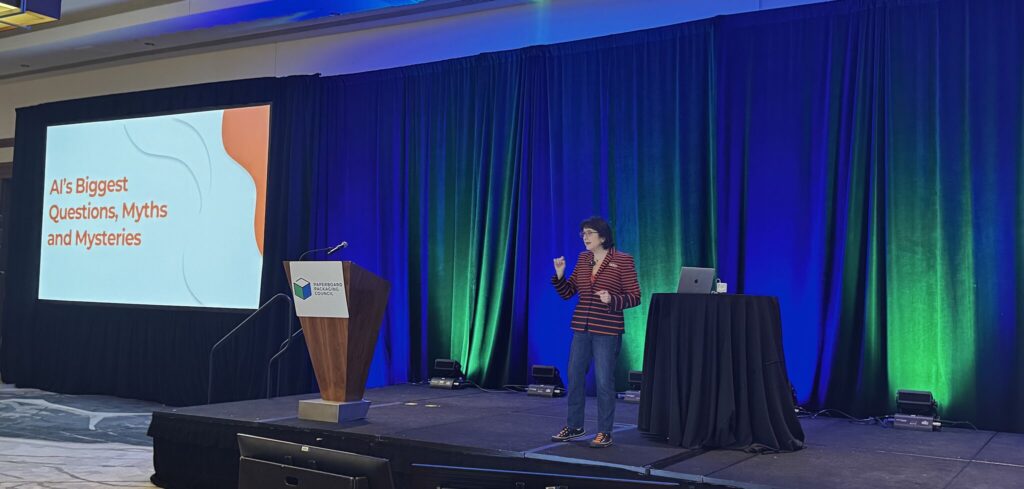
Beth Z, “Your Nerdy Best Friend,” delivered a fast-paced and eye-opening session on the real opportunities—and real risks—of AI today. In just 22 months, ChatGPT became the fastest-growing platform in history, setting the stage for an entirely new way businesses and individuals interact with technology.
AI Anxiety: What’s Real and What’s Hype
Beth tackled the widespread fear that “AI is going to take our jobs.” Her prediction? AI won’t replace people—it will replace tasks. Especially for roles like administrative work, AI offers streamlined solutions that can eliminate tedious responsibilities like performance reviews, translations, and even basic onboarding plans. She emphasized that the companies that integrate AI thoughtfully, not fearfully, will create stronger, more efficient teams.
The Reality Behind Generative AI
Beth explained that tools like ChatGPT don’t “know” facts—they generate content based on patterns in the data they’ve absorbed. That’s why fact-checking is critical. She showed how AI has already triggered lawsuits, particularly in audio and video content creation, and emphasized the importance of protecting intellectual property as AI tools “scrape” existing works to learn.
Tools of the Trade: Making AI Work for You
Beth demonstrated practical AI applications that members could start using today, including:
- Microsoft Copilot: Quickly generate branded PowerPoint decks in seconds, with notes.
- Perplexity and You.com: AI tools designed for real research, complete with citations and fact-checking (ideal for ensuring content accuracy).
- ZeroGPT and StealthGPT: Tools to detect or humanize AI-generated content to maintain authenticity.
- Voice Cloning and Protection: She stressed the importance of setting up a “safe word” to guard against deepfake threats and cloned voices.
The New Workplace Reality: Be a “Prompt Engineer”
Beth compared the AI revolution to the rise of consumer-friendly computers with Steve Jobs and Bill Gates. She encouraged attendees to sharpen their “prompt engineering” skills—becoming experts in asking the right questions to get better, safer results from AI tools.
Protecting Data and Navigating Bias
Beth warned that AI systems are hungry for data—and not always discerning about how they use it. Uploading proprietary information without precautions could expose companies to risks. She also discussed how AI can perpetuate biases, making it even more important to monitor how organizations deploy these tools.
Call to Action for PPC Members
Beth closed by urging everyone to embrace AI with their eyes open:
- Use it to eliminate “heinous tasks” and free up your teams for creative, high-impact work.
- Protect your IP and sensitive data aggressively.
- Invest time in learning how to leverage AI for research, branding, and communication.
- Remember: The future isn’t about replacing people with machines—it’s about empowering people with better tools.
Introducing Breakout Sessions
In Indianapolis, we introduced breakout sessions, giving members the opportunity to dive deeper into the topics shaping our future. Your willingness to engage in a new, more dynamic format helped create some of the most meaningful conversations of the event.
Sustainability Breakout Session: Moving from Talk to Action
Paul Nowak, Executive Director, GreenBlue
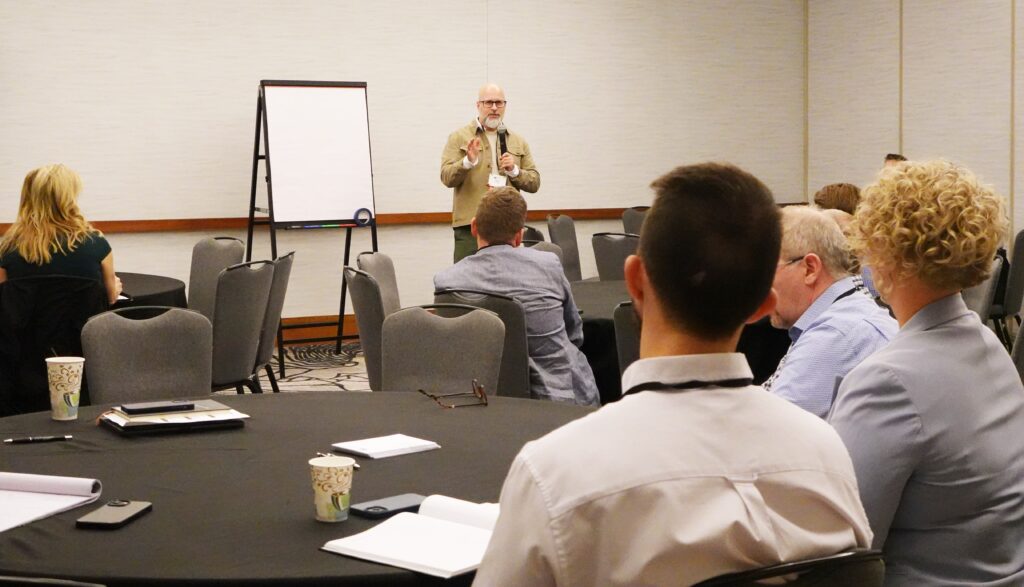
In an informative follow-up to his main stage presentation, Paul Nowak engaged PPC members in an interactive breakout session focused on sustainability, extended producer responsibility (EPR), and industry collaboration. The session provided a valuable forum for members to ask in-depth questions, explore real-world implications, and clarify how upcoming policies will impact the entire packaging value chain.
The discussion not only addressed challenges but also surfaced clear, actionable steps for converters, suppliers, and brand owners navigating the evolving regulatory and market landscape.
- Collaboration Is Critical.
Paul opened by emphasizing that collaboration, especially among competitors, is essential. Alternative materials are advancing quickly, and if the folding carton and paperboard industry doesn’t collaborate on recyclability data and infrastructure, they risk losing ground. - EPR Is Here—and Will Tighten Over Time.
EPR legislation is already shifting brand behavior, and while converters are not the primary targets today, that could evolve. Fees will initially fall on brand owners and retailers, but converters should anticipate trickle-down effects. Everyone in the supply chain needs to prepare for greater reporting and compliance requirements. - Data Gaps Must Be Closed.
The biggest gap for paperboard packaging? Holistic, national data on recyclability and recovery. Without it, claims cannot be properly defended against litigation or state requirements. Issues like the recyclability of pizza boxes or labels and RFID tags on cartons still need better national data backing. - Eco-Modulation and Material Costs Are Changing the Game.
Eco-modulation—charging higher fees for harder-to-recycle materials—is gaining momentum. While fiber-based packaging has an advantage, brands are carefully watching costs. Converters need to be ready to demonstrate how their products help brands avoid higher fees through better recyclability. - California Will Set the Bar.
California’s approach is stricter than other states: it’s not banning materials outright but making it increasingly difficult for non-recyclable materials to compete. Because of California’s market size, national brands will likely adjust their packaging for California standards and apply those nationwide, driving greater demand for sustainable, recyclable paperboard solutions. - Recovery, Not Just Access, Will Define Recyclability.
The next evolution will measure not just whether a material is collected (access) but whether it’s actually recovered and turned into new products. This raises the bar for recyclability claims, and paper packaging is relatively well-positioned, but gaps remain. - Change Will Be Messy—but It’s Progress.
Paul encouraged attendees to view EPR and recyclability challenges like a startup business: the system will have early hiccups, and not everything will work perfectly at first. But it’s better than standing still while waste continues to grow. - The Consumer Education Piece Matters.
Improving recycling rates isn’t just about building infrastructure—it’s also about educating consumers. Part of EPR funding will be used to create behavior change campaigns to ensure that good recycling systems are actually used properly. - Litigation Will Shape the Future.
Rather than crystal-clear guidelines from regulatory bodies, much of the definition around recyclable claims will likely be shaped by lawsuits and court rulings. Companies must be ready to defend their practices with strong data. - Be Proactive, Not Passive.
Converters and suppliers shouldn’t wait for regulations to force change. Instead, they should gather better recyclability data now, work with organizations like GreenBlue and SPC, and prepare for a future where sustainable packaging isn’t just a goal—it’s a regulatory and market necessity.
Bottom Line: The path to a truly circular packaging economy requires bold collaboration, shared data, and a willingness to adapt. As Paul put it: “Choose courage over fear, collaborate with purpose, and continue the momentum.”
Cybersecurity Breakout Session: Fortifying Your Human Firewall
Darryl Carlson, President, Royal Paper Box
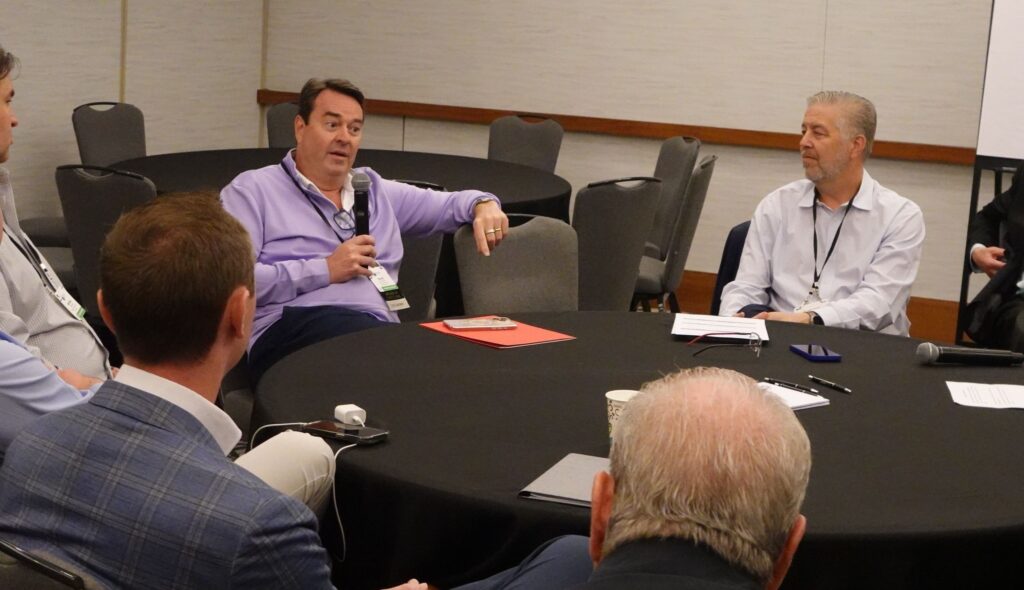
Cybersecurity is no longer just an IT issue, it’s a business-critical priority. In this breakout session, Darryl Carlson emphasized the rising risks facing manufacturers, particularly from social engineering attacks, and the urgent need for layered defenses.
Key Insights:
- Social Engineering is the Biggest Threat.
Most successful attacks aren’t technical breaches—they’re social engineering scams that trick employees into transferring money or revealing sensitive information. Real-world examples from session participants included fraudulent payment redirections, phishing emails, and fake vendor requests. - Training is the First and Best Defense.
Employees form the “human firewall.” Ongoing, mandatory phishing simulations, cyber training, and clear consequences for repeated missteps were cited as critical. Companies that tied phishing test performance to employee evaluations saw significant improvements in awareness. - Insurance Matters—But Read the Fine Print.
Cyber insurance and social engineering insurance are different and both are necessary. Policies often require companies to use their insurer’s preferred cybersecurity and legal firms to receive full reimbursement. Missing these steps can cut your coverage in half. - Incident Response Must Be Planned.
Several companies described tabletop exercises where teams practiced simulated cyberattacks to refine their technical response, legal protocols, and vendor/customer communications. Regular penetration testing also helps expose vulnerabilities before bad actors can. - Limit Access—Always.
Limiting employee access to only necessary systems and files reduces the damage when breaches happen. Even executives and IT staff should avoid having broad admin rights. - Manage Passwords and External Software Access.
Password managers were strongly recommended, along with disabling auto-saved browser passwords. Companies also flagged the hidden risks of third-party software (like pre-press and equipment providers) using generic credentials across client networks, creating backdoors for hackers. - The Threat Landscape is Constantly Evolving.
Tens of thousands of attacks hit manufacturers’ networks every year. Manufacturing is now one of the top-targeted sectors because hackers see it as under-protected compared to industries like finance or healthcare. - Proactive Security Improves Insurance Costs.
Companies that demonstrated employee training, penetration testing, strong password policies, and layered cybersecurity defenses reported better terms and discounts from insurers.
Bottom Line: Cybersecurity isn’t a one-time project—it’s a continuous, layered strategy combining people, technology, insurance, and constant vigilance. As Darryl put it, “Focus your energy on training your people—because if a breach gets past them, it’s already too late.”
Safety Breakout Session: No Secrets, Just Smarter Choices
Galen Killam, Vice President & General Manager, Great Northern Corp.
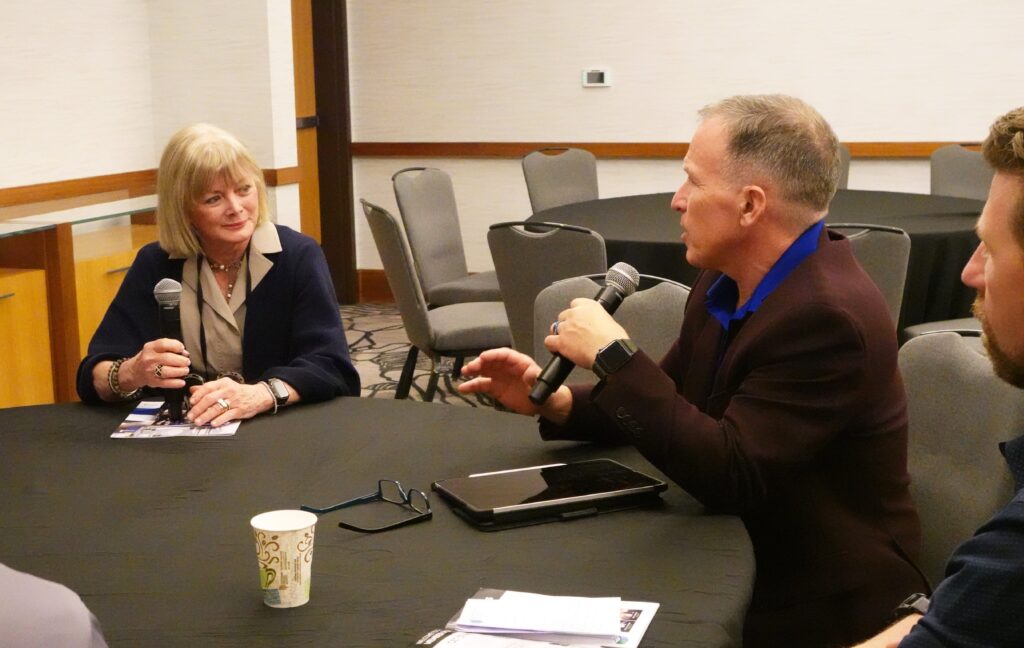
In his breakout session, Galen Killam led a thoughtful and solution-focused discussion on what it takes to create a truly proactive safety culture. Members shared challenges, insights, and real-life examples from their own operations—sparking practical dialogue on how to move beyond compliance toward a mindset of shared responsibility.
Key Takeaways:
- Mindset Over Metrics:
Galen emphasized that safety can’t be reduced to numbers alone. True safety requires a mindset shift—from tracking lagging indicators to spotting and acting on early “weak signals” that predict risk. - Empowerment at Every Level:
The most effective programs enable employees to identify and report hazards in real time. At Great Northern, all team members are encouraged to take ownership, no matter their role. - Mindfulness on the Floor:
Several incidents discussed weren’t due to mechanical failure but momentary lapses in focus. Members highlighted the importance of mental presence and consistent reminders to stay alert. - Curbing Cell Phone Distraction:
Companies shared ongoing challenges with managing cell phone use in production areas. Galen’s team uses third-party certifications (like BRCGS) to help enforce no-phone policies with success. - Recognition with Care:
While incentives like gift cards and small rewards help reinforce safe behaviors, members noted that overemphasizing “days without incidents” can backfire—discouraging transparent reporting of minor injuries. - Peer Learning and Support:
Participants expressed a desire for more tools from PPC to support safety leads across the industry—including accessible contact lists, shared metrics, and continued peer roundtables. - Culture Is Built Through Conversation:
The session reaffirmed that open, honest discussion is key to evolving safety programs. Informal peer exchanges like this one play a powerful role in helping companies benchmark and grow.
Bottom Line: Building a strong safety culture takes more than policies—it requires leadership that empowers, systems that listen, and a workforce that believes in its role. As Galen noted, it’s not about perfection, it’s about continuous improvement—and PPC members are stronger when they learn from one another.
Leadership & Workforce Breakout: Engaging Your Team for the Long Term
Lisa Pruett, President, Packaging and Label Segment, RRD
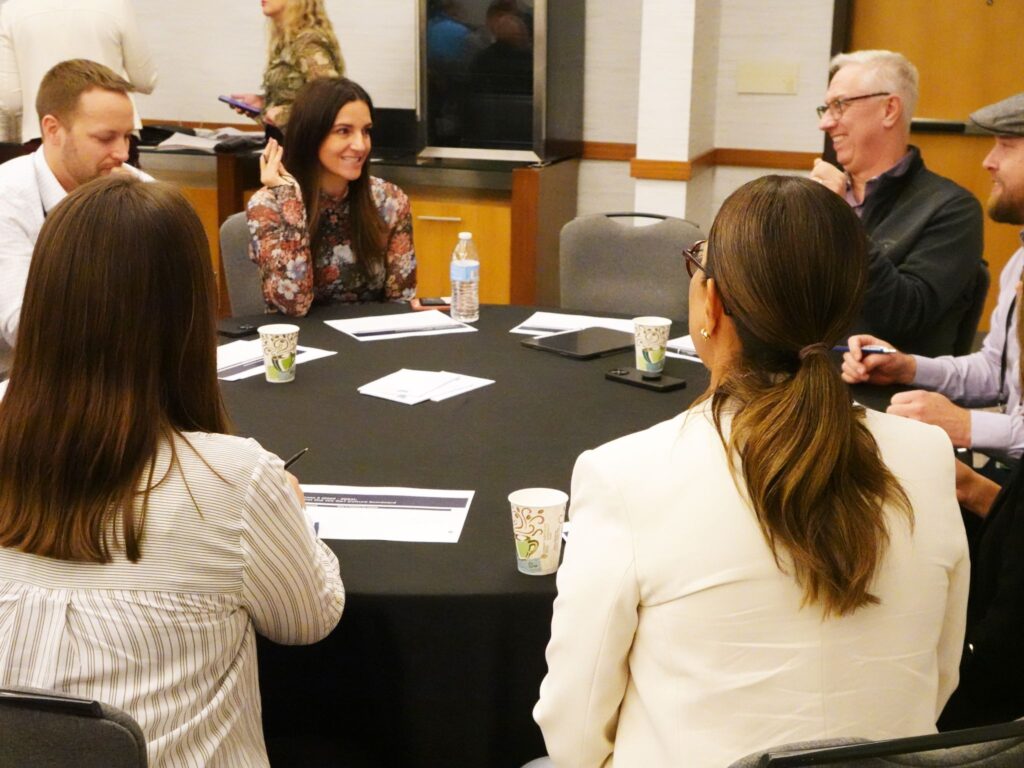
In her breakout session, Lisa Pruett facilitated an energetic, solutions-driven conversation around strengthening workforce engagement and building leadership at all levels of an organization. Attendees shared real-world strategies and challenges, leading to a dynamic exchange of ideas.
Key Takeaways:
- Mentorship Matters: Several companies reported success with formal mentor programs where new employees select mentors from different departments, fostering cross-functional learning and stronger early engagement.
- Internal Engagement Metrics: Measuring employee sentiment with quick, consistent internal surveys—similar to customer NPS scores—can offer real-time insights into culture and morale. Companies emphasized the importance of acting on results to build trust.
- Peer-to-Peer Recognition: Platforms that enable employees to recognize and celebrate each other’s contributions—like digital “touts” or public shoutouts—were highlighted as low-cost but high-impact tools for reinforcing a culture of appreciation.
- Attitude Over Aptitude: When hiring and promoting, several leaders stressed the importance of prioritizing attitude and willingness to collaborate over pure technical skill alone.
- Communicate with Brevity and Consistency: Whether it’s safety, culture, or business updates, short, consistent messages were seen as more memorable and effective than longer, infrequent ones.
- Celebrate Wins: Recognition for hitting milestones—whether through barbecues, awards, or public acknowledgments—helps to solidify a sense of shared purpose.
- Culture Requires Full Commitment: Several participants stressed that building culture isn’t something organizations can “dabble” in; it requires leadership to be all-in, both formally and informally modeling the desired behaviors.
- Cross-Training and Career Visibility: Posting skill matrices and showcasing growth opportunities within companies encourages workforce mobility and retention, particularly for those motivated to advance.
- Accountability and Action: Leaders must address attendance, engagement, and safety issues consistently. Team members need to know that expectations are real, and that accountability is part of the culture.
Bottom Line: Lisa’s session reinforced that culture isn’t built through checklists alone—it’s an intentional, daily effort that demands leadership at every level.
Honoring Excellence: Safety & Service
During our annual Chair Safety Awards Ceremony + Dinner, we celebrated the individuals and organizations that exemplify the values of our industry—safety, service, and leadership.

Chair’s Safety Award
 Presented as part of PPC’s Industry Benchmarking Program, the Chair’s Safety Award recognizes the plant with the most hours worked in a year without an OSHA recordable incident. This year’s recipient, Graphic Packaging International’s Queretaro Plant in Mexico, demonstrated their uncompromising commitment to workplace safety—turning policy into daily practice.
Congratulations to the entire Queretaro team for setting a powerful example and raising the bar for safety across the industry.
Volunteer Leader Award
 At the heart of PPC is a vibrant, committed member community. This year, we proudly recognized Andy Johnson of Graphic Packaging International with the Volunteer Leader Award. Andy’s contributions to PPC—from driving sustainability initiatives to mentoring future leaders—embody the spirit of service that powers our progress. His impact is a testament to what’s possible when members lead with heart, integrity, and purpose.
Thank you to Andy and the Queretaro Plant team for inspiring us all.
Thank You to Our Partners
This event wouldn’t have been possible without the incredible support of our sponsors. Thank you for continuing to invest in our community.
We hope you’ll continue the momentum by joining us at PPC’s upcoming events: PPC Next: Leadership Summit in Frisco, TX, and Fall Meeting 2025 in Vancouver, BC.
Let’s keep learning, leading, and growing together.