Designing for the Shelf, the Supply Chain, and the Future
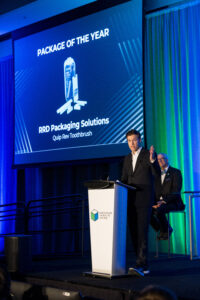
How RRD Packaging Solutions’ award-winning Quip Rev Toothbrush package balanced sustainability, efficiency, and brand differentiation to earn PPC’s Package of the Year
Innovation in folding carton packaging rarely comes from a single idea. More often, it emerges from a series of thoughtful design decisions that balance brand identity, sustainability goals, manufacturing realities, and the ever-present pressure to reduce cost and complexity.
That balance is exactly what our Annual Paperboard Packaging Competition was created to recognize. Each year, the competition highlights the most creative and technically advanced cartons produced across North America, celebrating the craftsmanship, ingenuity, and collaboration that drive the industry forward.
At the 82nd Annual Paperboard Packaging Competition, RRD Packaging Solutions captured the competition’s top honor, Package of the Year, for its work on the Quip Rev Toothbrush package. The design stood out to judges for its distinctive curved structure, plastic-free materials, and thoughtful engineering that reduced both material use and manufacturing complexity while maintaining a strong shelf presence.
Behind that result was a design process that challenged conventional trade-offs. Could a package maintain a distinctive retail identity while reducing cost? Could sustainability goals be met without sacrificing production efficiency? And could the entire structure be simplified while still protecting the product and supporting high-volume fulfillment?
To explore how those questions were answered, PPC spoke with Joe Schewe, Director of Structural Design (CPP) at RRD Packaging Solutions, about the thinking behind the design and the broader trends shaping innovation in paperboard packaging.
____________________________________________________________________________________
 PPC: What was the core problem the Quip Rev packaging needed to solve, and what “non-negotiables” were set from the start (performance, sustainability, brand experience, cost, etc.)?
Joe Schewe (JS): Since their inception, Quip has stressed the importance of having a unique, attention-grabbing look on the retail shelf. Their previous packaging iterations included curved edges, which stood out from standard, squared-off cartons and were the primary driver for all initial concepts. Beyond the curved edges that signified their brand, other requirements included using plastic-free, recyclable materials. Lastly, they wanted to reduce the overall cost of their packaging while allowing for reasonable filling and assembly times in manufacturing.
PPC: As the packaging design evolved, where did you have to make the hardest trade-offs between protection, sustainability, shelf presence, and production realities?
JS: The largest challenge was to include a unique curved edge while maintaining high quality at a lower cost than the previous packaging design. Each of these factors impacts the others, but the desire for a unique shelf presence drove innovation as much as possible within the limitations of not using plastic.
PPC: The redesign eliminated wafer seals, integrated molded pulp, and significantly reduced material and size. What structural decisions enabled those measurable gains, and how did you validate performance throughout development?
JS: The previous packaging included curved edges on the sides. As we evaluated ways to make the shape unique, we found that keeping the curved feature on the front and back faces kept costs down, enabling a much more efficient production process. That direction allowed us to get away from sealing multiple components together. For sizing, we found that the molded pulp was effective at protecting the product when sized exactly to the product’s height, keeping the overall packaging footprint to a minimum. Quip then studied the shelf appeal of this design through user testing and found the results to be positive. High-temperature and humidity testing, along with drop and vibration analysis, was completed to ensure the packaging’s viability.
PPC: The rounded corners and embossed vibration-wave graphics are distinctive. What influenced those structural and tactile choices, and how did they enhance consumer experience or retail differentiation?
JS: Quip’s creative team had been focused on these aspects from the start. The curved edges are used to stand out, while the debossed vibration waves clearly communicate the product’s working action. With each packaging generation, we have collaborated to maintain these distinctive features across all their products, ensuring cohesive brand identity and shelf presence.
PPC: How did nesting, cubing, and fulfillment efficiency influence the final structure? And how important is it to design with the entire supply chain in mind?
JS: We wanted to keep the design compact for supply chain efficiency by keeping the package footprint as close to the product size as possible, reducing the amount of empty space shipped. With a high unit volume and overseas freight involved in their distribution, this significantly contributed to costs. Additionally, the design was created with the efficiency of filling and assembly in mind. The number of components was reduced from the previous iteration, and using a single molded pulp component enabled very fast and effective product loading with minimal touchpoints in manufacturing.
PPC: Looking at the bigger picture, what ultimately sets the Quip Rev packaging apart, and what structural design trends or opportunities are you seeing shape the future of paperboard innovation?
JS: This package is a great example of how you don’t necessarily have to sacrifice cost, sustainability, or efficiency to make something different. Quip, along with many modern brands, is looking for ways to stand out from its competition. However, the perception is often that too many sacrifices to other areas of the business would be needed. We have found that when clients take the time to evaluate options and partner with their vendors, it can lead to innovative and amazing results.
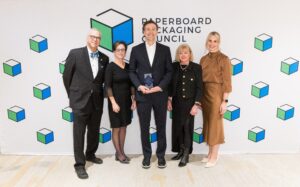 Innovation Happens When Teams Push Beyond Assumptions
The Quip Rev package demonstrates what can happen when brands and packaging partners take the time to challenge assumptions. Rather than treating cost, sustainability, and differentiation as competing priorities, the project approached them as interconnected design problems, resulting in a solution that improved shelf presence, reduced material use, and streamlined manufacturing.
That kind of innovation is exactly what the Paperboard Packaging Competition celebrates.
Each year, converters across North America submit their most advanced and creative work, allowing the industry to recognize breakthrough designs while sharing ideas that inspire the next generation of packaging innovation. If your team developed a package this past year that demonstrates exceptional craftsmanship, sustainability, or structural ingenuity, we encourage you to share it with the industry.
Submissions for the 83rd Annual Paperboard Packaging Competition are now open.
Entries close May 15. Submit your best work and join the industry leaders recognized on the PPC stage this fall: https://paperbox.org/programs/carton-competition/