Sustainability is often framed as a trade-off. Reduce impact, but increase cost. Improve recyclability, but add complexity.
At Diamond Packaging, it’s approached differently: not as a constraint, but as a design challenge.
This Earth Day, that distinction matters.
For years, Diamond Packaging has embedded sustainability into the design, production, and delivery of packaging. What began as a focus on reducing environmental impact has evolved into something more integrated: a business model where sustainability drives innovation, performance, and long-term value.
More Than a Commitment: A Way of Operating
At Diamond, sustainability is not a standalone initiative. It is built into the business’s operations.
“Sustainability at Diamond isn’t theoretical. It’s operational, measurable, and directly tied to how we create value for our customers,” said Dennis Bacchetta, Marketing & Sustainability Director.
That definition is intentional. Diamond views sustainability through a broader lens, one that connects environmental, social, and economic outcomes, which they often describe as delivering “Beauty without compromise.”
That mindset didn’t happen overnight.
An early turning point came in 2007, when Diamond committed to 100% renewable electricity, becoming one of the first U.S. folding carton suppliers to do so. The move did more than reduce emissions. It fundamentally changed how the company thought about production, shifting the focus from incremental improvement to system-wide transformation.
That thinking carried forward into initiatives like Zero Waste to Landfill, where waste was redefined as a resource. By building local partnerships and redesigning internal processes, Diamond now diverts virtually all manufacturing waste from landfill, with portions of that material returning to the supply chain as new products.
What ties these efforts together is a clear structure. Diamond’s approach is built around three pillars: designs, materials, and methods, ensuring sustainability is embedded at every stage of the packaging lifecycle.
Designing for What Comes Next
 For Diamond, sustainability begins at the design stage.
Packaging is engineered to reduce material use while improving recyclability, ensuring that environmental gains do not come at the expense of performance. Material choices are guided by responsible sourcing, with an emphasis on FSC-certified and recycled inputs, supported by greater transparency across the supply chain. At the same time, production methods continue to evolve through renewable energy, zero-waste operations, and ongoing process improvements that lower emissions and increase efficiency.
This integrated approach reflects a broader shift in the industry.
“Sustainability has evolved from a trend to an expectation, and now to a legal, financial, and consumer-driven imperative,” Dennis noted.
Proving It with Results
Execution is where sustainability strategies are tested.
At Diamond, progress has come from aligning innovation, operations, and partnerships around a shared approach. That alignment has led to measurable outcomes, from eliminating market-based Scope 2 emissions through renewable energy to diverting nearly all manufacturing waste from landfill. Structural design improvements continue to reduce material usage, while expanded data collection is improving visibility across Scope 1, 2, and 3 emissions.
What makes these efforts effective is their interconnectedness. Each improvement reinforces the next, creating efficiencies that extend beyond sustainability to cost, performance, and resilience.
Where Execution Gets Challenging
Even with a clear strategy, implementation is complex.
One of the most persistent challenges is balancing sustainability, performance, and cost, particularly in premium packaging, where aesthetics are critical.
“Our customers expect high-end decoration, so the question isn’t just ‘Is it sustainable?’ but ‘Can it deliver the same brand impact?’” Dennis explained.
Diamond’s response has been to invest in design innovation rather than compromise. Early work, such as Green Chic™ packaging, demonstrated that luxury presentation and environmental responsibility can coexist, using advanced in-line decorative technologies without adding unnecessary materials.
Other challenges have required a different approach. Improving the accuracy of Scope 3 emissions data has meant working closely with suppliers to move from broad estimates to more precise, product-level insights. Aligning the supply chain has required setting clearer expectations around transparency and collaboration. And navigating evolving regulations, from recyclability standards to global reporting frameworks, has reinforced the importance of flexibility and credible, data-backed claims.
Through it all, Diamond has treated complexity as a catalyst for improvement.
Meeting Higher Expectations
As sustainability expectations evolve, so do the demands placed on packaging.
Today’s brands are looking for solutions that are not only recyclable but optimized for recyclability. They expect reduced material use, improved recovery in real-world systems, and greater transparency across the product’s entire lifecycle.
“Customers are looking for partners who can turn sustainability into practical, scalable solutions,” Dennis said.
That shift is pushing the industry forward—and raising the bar for what packaging must deliver.
Making Sustainability Tangible
While much of this work happens behind the scenes, Diamond is equally focused on making sustainability visible and accessible.
Through its long-standing Earth Day partnership with the Seneca Park Zoo, now in its 12th year, and its involvement in PPC’s TICCIT program, the company is helping connect sustainability to real-world experiences.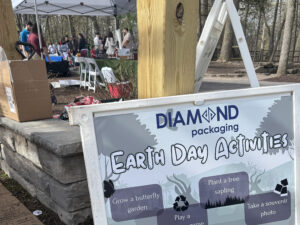
Each year, these initiatives bring together hundreds of children and families to plant trees, create pollinator habitats, and learn about recycling and renewable materials. Programs like TICCIT make sustainability tangible, showing how paperboard packaging fits into a circular system.
The impact goes beyond education. These efforts help build trust, shift perceptions, and position packaging as part of the solution.
Leading the Transition
The opportunity for paperboard packaging is clear: to lead the transition to a more circular, low-carbon system—one that is scalable and measurable.
 Reaching that future will require continued progress in design, stronger recovery systems, better data, and active collaboration across the value chain. It will also require the industry to stay engaged as regulations evolve, ensuring that policies reflect real-world conditions.
At Diamond Packaging, that work is already underway.
Sustainability is not treated as a separate initiative. It is embedded in how the business operates, innovates, and grows.
And this Earth Day, that leadership is worth recognizing.
…
Get involved in TICCIT (Trees Into Cartons, Cartons Into Trees), PPC’s hands-on program that brings sustainability to life by connecting students to the renewable lifecycle of paperboard packaging. Visit ticcit.info to learn more and join the effort to grow the next generation’s understanding of sustainable packaging.