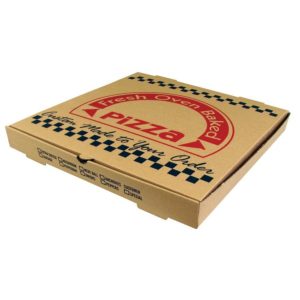
 There has been increasing coverage in the media over the US FDA’s recent banning of three chemicals used as “paper treatments” in certain food applications. The media has focused their coverage on pizza boxes containing these chemicals and their potential impact on food safety.
The chemicals (perfluorocarboxylate substances) have been under review for some time. The FDA has formally banned their use and released a statement to that effect last week. However as noted in the below statement from the American Forest & Paper Association, this should not be a concern as these chemicals, in general, represent old technology and are no longer used in the United States.
As always, you should check with all of your own suppliers. We will continue to keep you updated.
AF&PA Statement
January 8, 2016
Food and Drug Administration Final Rule to Ban Chemicals used in Paper and Paperboard Applications
PURPOSE
To update the membership on a recent Food and Drug Administration (FDA) decision to ban the use of three food-contact chemicals used as oil and water repellants for paper and paperboard.
BACKGROUND
On January 4, 2016, FDA announced it amended the food additive regulations to no longer allow the use of three specific perflouroalkyl ethyl containing food-contact substances as oil and water repellants for paper and paperboard food contact packaging for aqueous and fatty foods. FDA based its action on new data FDA believes demonstrates there no longer is a reasonable certainty of no harm from the food-contact use of these chemicals. The FDA action means the chemicals listed below are no longer permitted as components of food contact paper. However, this should not be an issue for member companies as the use of these three chemicals and long-chain perfluorinated chemicals, in general, represent old technology and are no longer used in the United States.
These chemicals are:
- Diethanolamine salts of mono- and bis(1H, 1H, 2H, 2H perfluoroalkyl) phosphates where the alkyl group is even-numbered in the range C8-C18 and the salts have a fluorine content of 52.4 % to 54.4% as determined on a solids basis;
- Pentanoic acid, 4,4-bis [(gamma-omega-perfluoro-C8-20-alkyl)thio] derivatives, compounds with diethanolamine (CAS Reg. No. 71608-61-2); and
- Perfluoroalkyl substituted phosphate ester acids, ammonium salts formed by the reaction of 2, 2-bis[([gamma], [omega]- perfluoro C4-20 alkylthio) methyl] – 1,3-propanediol, polyphosphoric acid and ammonium hydroxide.
DISCUSSION
The FDA notice states that the available information on long-chain perfluorinated compounds as a chemical class became available after the food contact use of the three chemicals was approved. The FDA decision is based on the toxicological profile of these chemicals in two areas: 1) biopersistence, and 2) reproductive and developmental toxicity.
In general, chemicals with perfluorinated alkyl chains greater than or equal to eight carbons in length demonstrate biopersistence while those with extended chains less than eight carbons in length do not. Biopersistence is the persistence and accumulation of a chemical in a biological tissue. All three of the chemicals affected by this rule have perfluorinated alkyl chains greater than or equal to eight carbons in length and are considered long-chain perfluorinated compounds. FDA also made the determination that chemicals similar in chemical structure to the three listed here demonstrated reproductive and developmental toxicity in laboratory rodents. Based on structural similarities, FDA concluded that these toxicological data were applicable to the three chemicals listed in the final rule, and accordingly, determined lack of the requisite safety standard, i.e., a reasonable certainty of no harm.
AF&PA has been involved in this matter through the Food Packaging Coalition. Last year, the coalition met with FDA officials to discuss the filing of an abandonment petition for the three chemicals in lieu of a safety determination by FDA due to the lack of use in paper and paperboard manufacturing. Ultimately, however, FDA chose to conduct a safety determination on the chemicals and used the result of this determination as the basis to de-list the chemicals.