 By Doug Schardt, Director of Product Management, Komori America
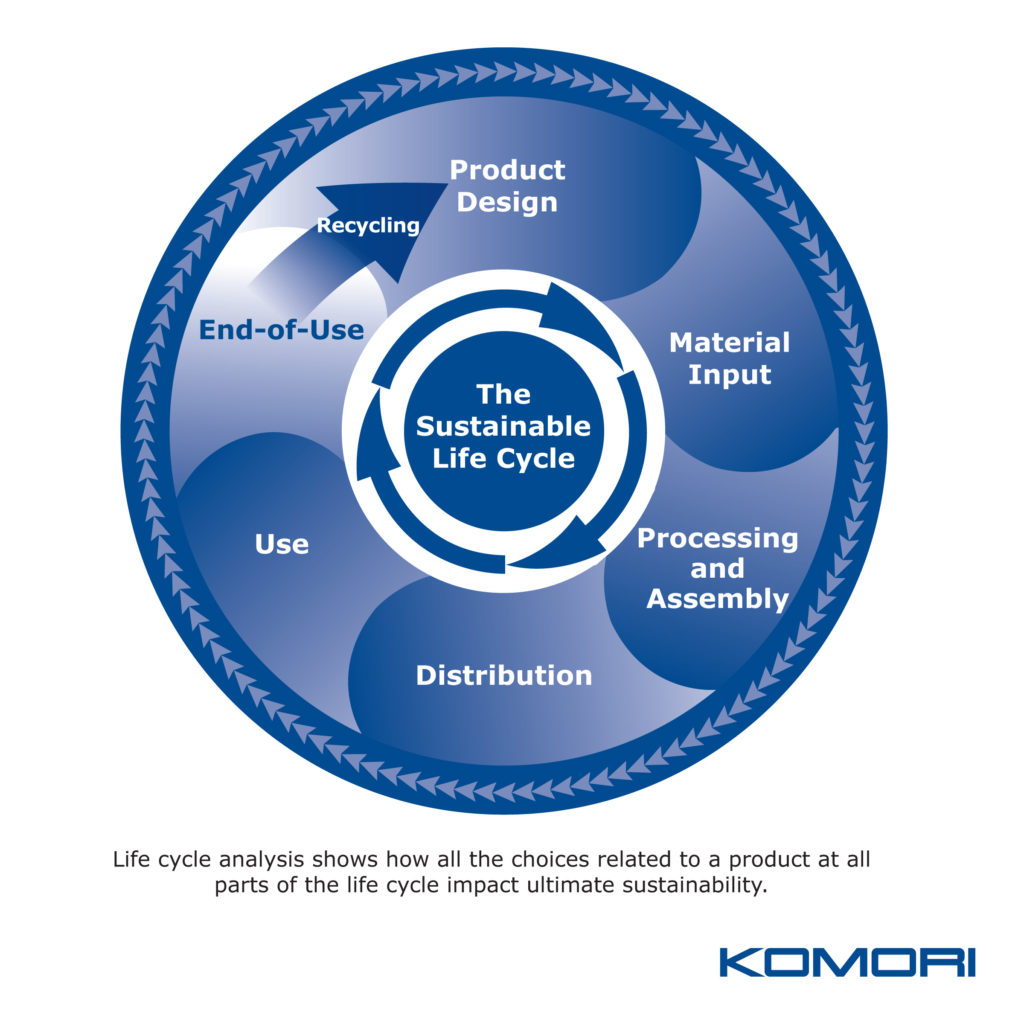
Environmental sustainability has been a guiding vision for paperboard manufacturers since the initial drive to eliminate VOCs and alcohol from the printing process. Today, decarbonization is fast becoming an industry-wide movement, and folding carton converters are adding green practices to their operations in response. However, the benefits of reducing the carbon footprint can go beyond helping the environment. By adopting a comprehensive approach to environmental sustainability, both operational efficiency and the bottom line are enhanced in the process.
Improved Pressroom Techniques and Technology to Reduce Harmful Chemicals
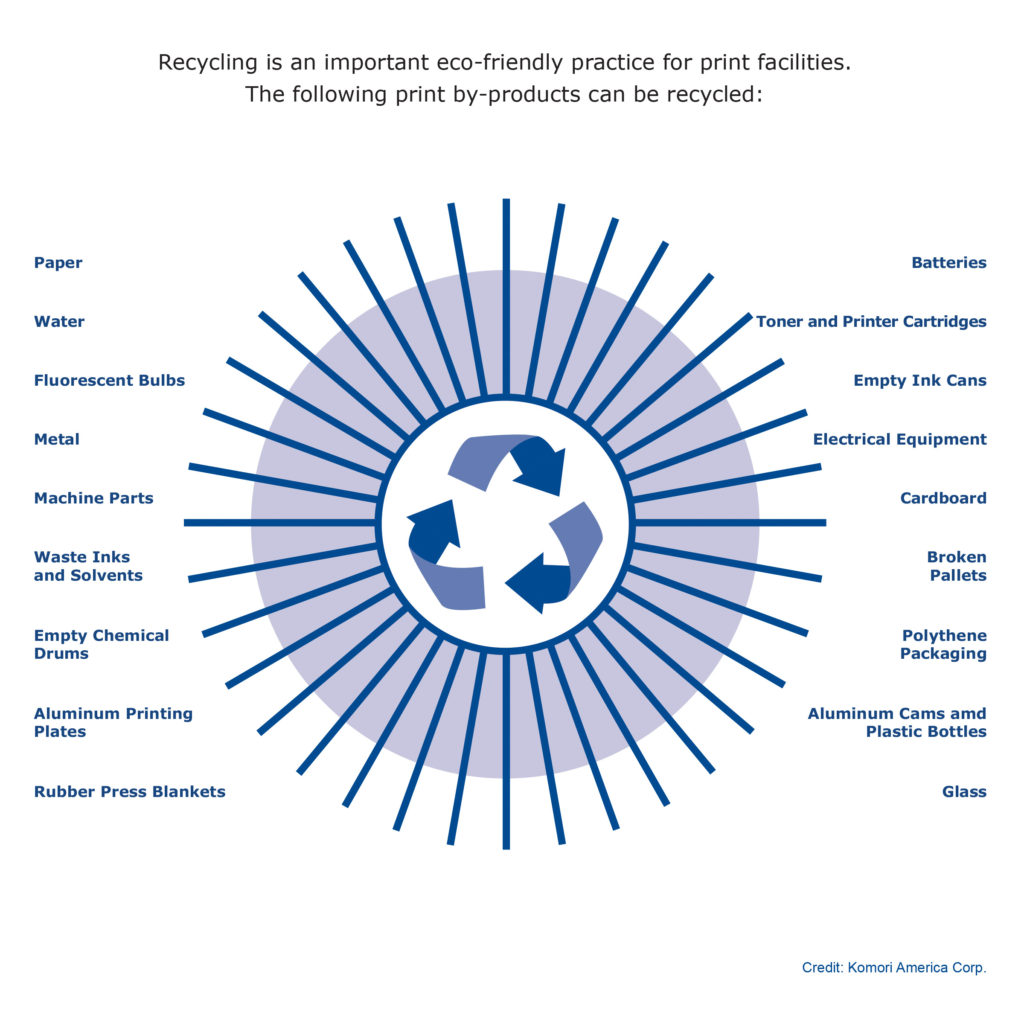
If launching a comprehensive environmental sustainability program feels like a tall order, start by reducing the use of harmful chemicals. Upgrades to automatic blanket washers and ink roller washers can reduce the use of caustic solvents and save money on disposal fees down the road. Older blanket washers used a brush and required liberal applications of solvent that had to be recaptured for disposal. Today, newer press models use a solvent-impregnated cloth that minimizes the waste produced, making disposal a much simpler and cleaner process. Likewise, advances in technology, engineering, and software mean that newer presses use less than a shot glass of water and solvent combined to clean a unit of ink rollers—without sacrificing any quality in the wash.
Improved techniques in the pressroom can also reduce the use of harsh chemicals. For example, on shorter jobs, you can run a few additional sheets with the form rollers off the plates, rather than blanket washing your equipment at the end of each job. By stripping the residual ink from all the blankets and plates in preparation for the makeready, you can apply this method for four or five jobs before a blanket wash is required. You can also eliminate unnecessary ink roller washes when moving from a job with very heavy coverage to a job with light coverage by returning excess ink from the rollers to the fountain, provided the press design allows it.
Optimize Operations by Automating Your Overall Workflow
Improving individual processes provides a good start, but optimizing your overall workflow is the key to accelerating your movement toward decarbonization. This is where the Internet of Things (IoT) can be a game-changer. Adopting a plant-wide communication system that allows press equipment to talk to other press equipment, which in turn talks to bindery or finishing equipment, and so on, provides real-time information on overall production and individual job status. Most importantly, an integrated communication system helps you identify production bottlenecks, so you can address them quickly and minimize wasted time and materials. The added benefit is that improved efficiency leads to a reduced environmental impact, allowing you to seamlessly marry productivity and sustainability.
However, improved connectivity does require compatible equipment that can send and receive data. Most new equipment comes with this functionality, but often production relies on legacy machines somewhere in the production line, and those machines can’t always link into an overall print production process. In such cases, you can install a communication portal near the legacy machine to transmit information, but even then, some human interaction may be required. If you plan on acquiring equipment, consider connectivity features that allow the synchronization of communication between new and old machines.
Another way to automate your overall workflow is to leverage the latest generation of offset presses, which uses highly sophisticated software to integrate with management information systems (MIS) and IoT. Some of these presses use a type of artificial intelligence (AI) to identify and implement ongoing improvements in print quality and productivity. For example, an AI-assisted makeready system will “learn” to compensate for the different ink flow rates as the pressroom temperature changes throughout the day. AI can also learn what type of ink works best on absorptive or glossy substrates, calculate the optimal amount required, and preset the ink fountains for the desired substrate during the next print run. With AI, you waste less paper, ink, and time in coming up to color and producing usable sheets. Automating job changeovers, wash-ups, and plate changes also save on operator labor, eliminate the overuse of solvents, and reduce machine downtime.
 Harness Digitalization to Gain Visibility and Improve Performance
To gain visibility into your production workflow, harness digitalization to collect, measure, and record the details of your production activities. Using AI, you can analyze production data and use the information to resolve issues and prevent them from impacting other aspects of production. Let’s say that poor quality stock is adversely affecting the performance of your offset equipment. By automating individual and linked systems and using the visibility it provides, you can prevent this issue from your affecting die cutting performance as well. You can also use the increased visibility to factor in any variable conditions when costing a job. In turn, having more accurate projections will head off unnecessary loss and lead to increased profits.
While investing in the latest, fully automated presses may require an upfront investment, it is proven to save money in the long run. In many cases, a print provider has replaced two older press models with one that outputs the same or higher volumes quicker and more efficiently. Additionally, presses equipped with electronic sheet inspection can examine each sheet while printing at full speed and report any changes immediately, while simultaneously tagging the load. Along with sheet detection, these systems also offer automatic registration and continuous control of ink, which minimizes running waste and ensures that delivered jobs meet customer expectations.
Another big advantage of investing in digital processes is now your operation will be ready if and when data-driven, connectible folders and die cutters hit the market.
 Efficiency – The Path to Sustainability and Profitability
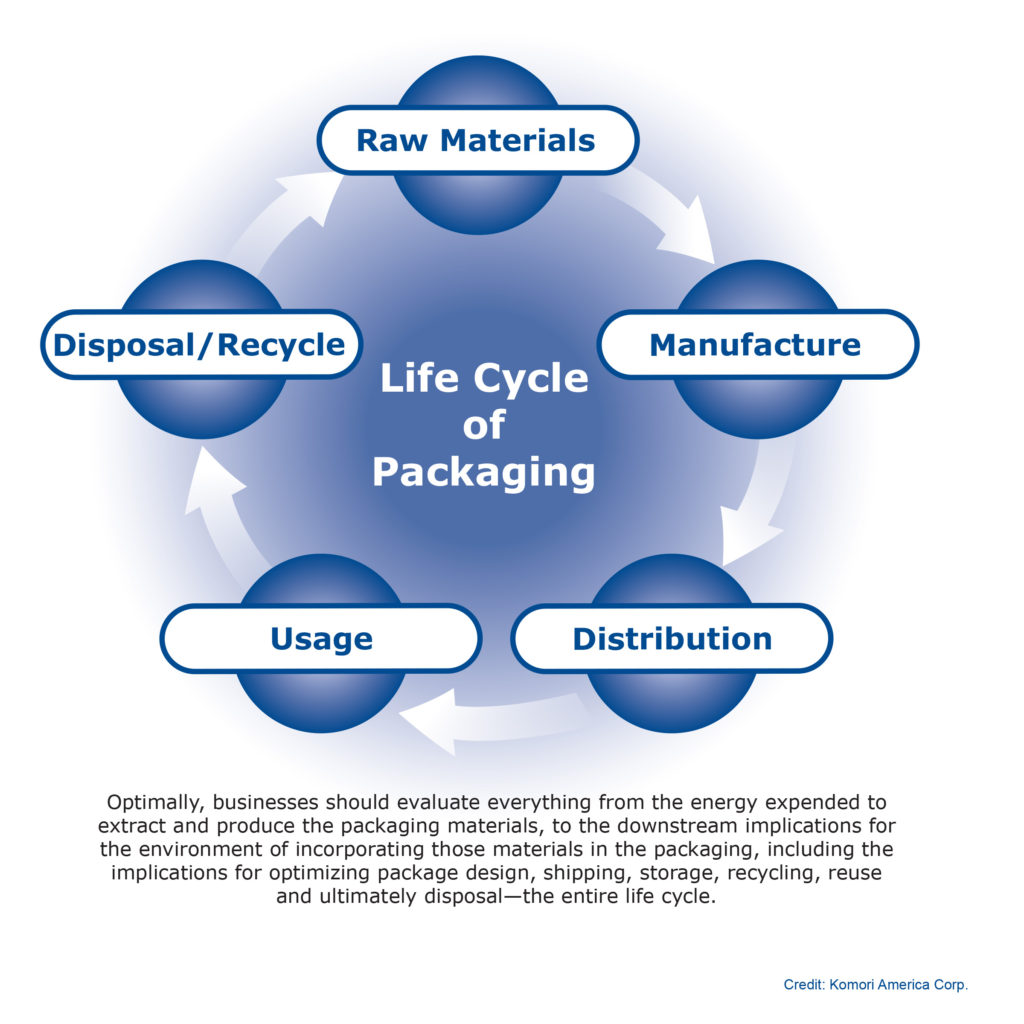
Efficiency is one of the surest ways to control costs and operate profitably, but it’s also the path to reducing your carbon footprint. Improving the productivity of your printing presses, connecting your processes, and optimizing your use of the operator, press time, and materials can save money now and protect the environment for the future. The result is a win-win situation for a greener planet and a blacker bottom line.
Doug Schardt is Director of Product Management for Komori America, a premier manufacturer of offset and digital printing presses. Schardt’s experience with a wide variety of print applications and his constant involvement in the industry’s newest technologies supports Komori’s dedication to helping its customers navigate the changing market landscape. He can be reached at dschardt@komori.us.